Conjunctival tumors
What you need to know about ocular surface tumors
Anatomy
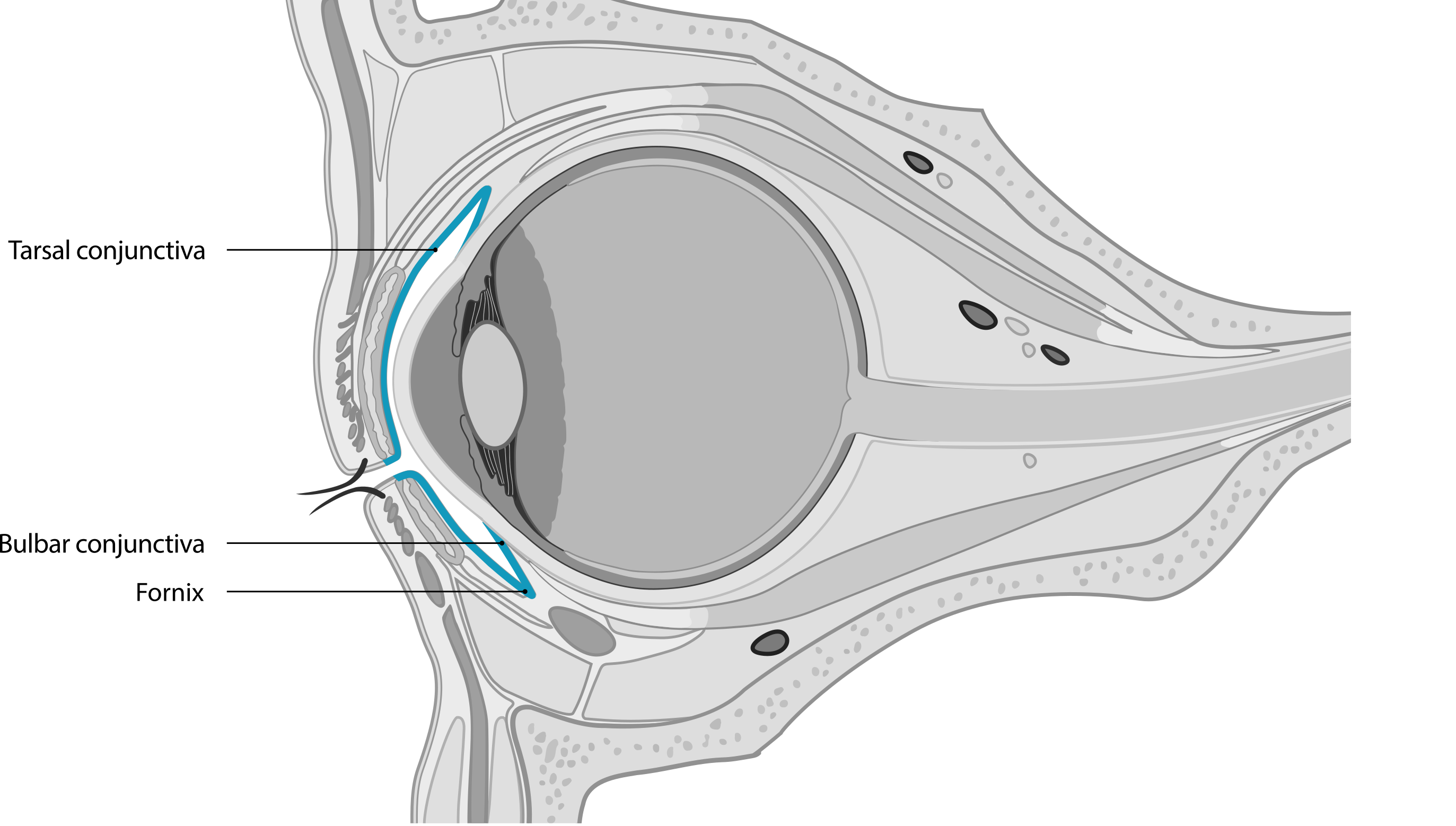
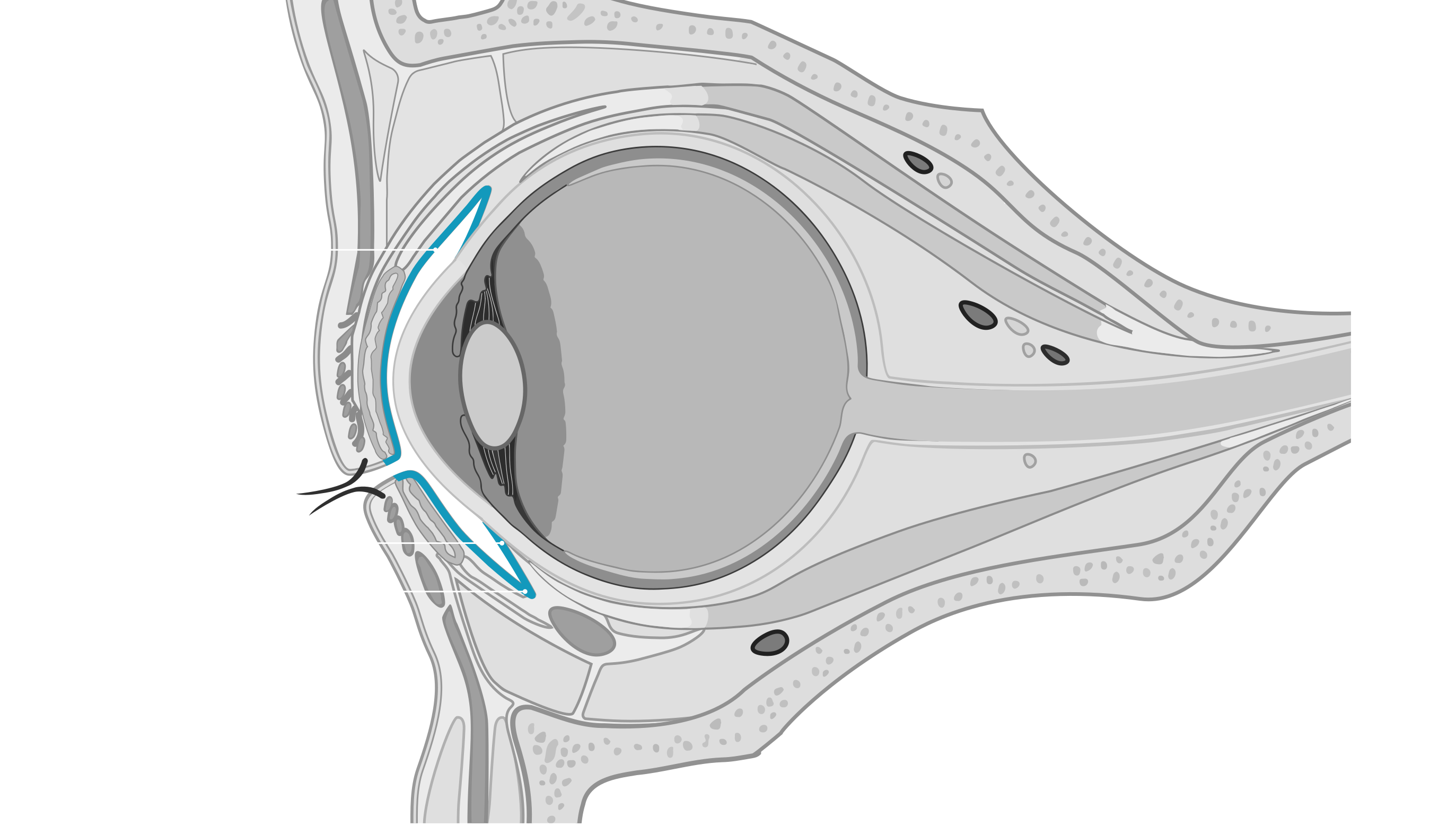
The conjunctiva is a mucous membrane that covers most of the ocular surface. It covers both the anterior part of the eyeball (sclera), except for the transparent part (cornea), and the inner surface of the eyelids in contact with the eyeball. The conjunctiva plays a particularly important role in maintaining corneal homeostasis, providing immune defense and maintaining a good quality tear film.
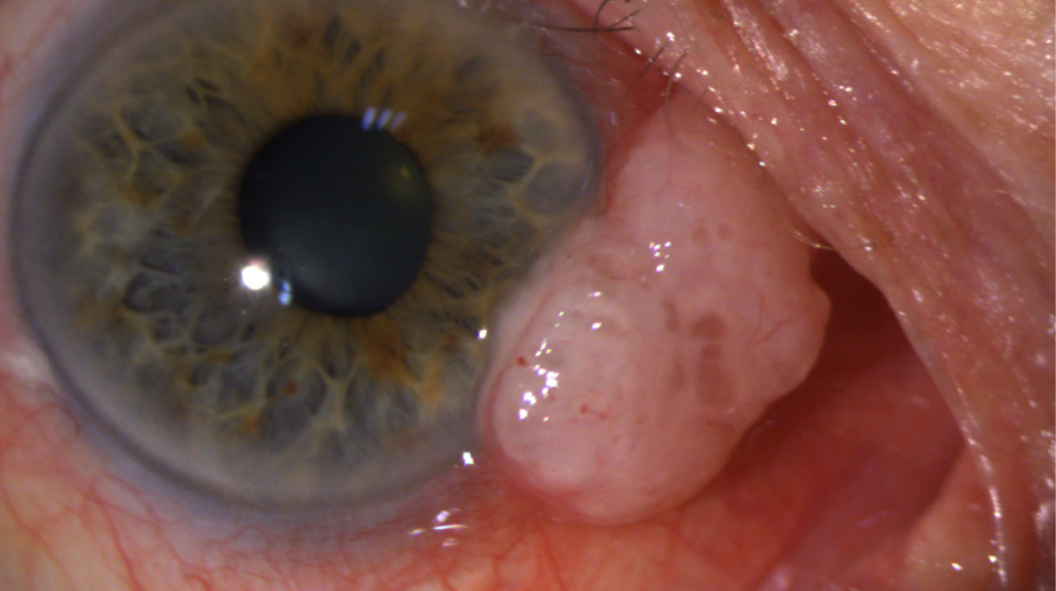
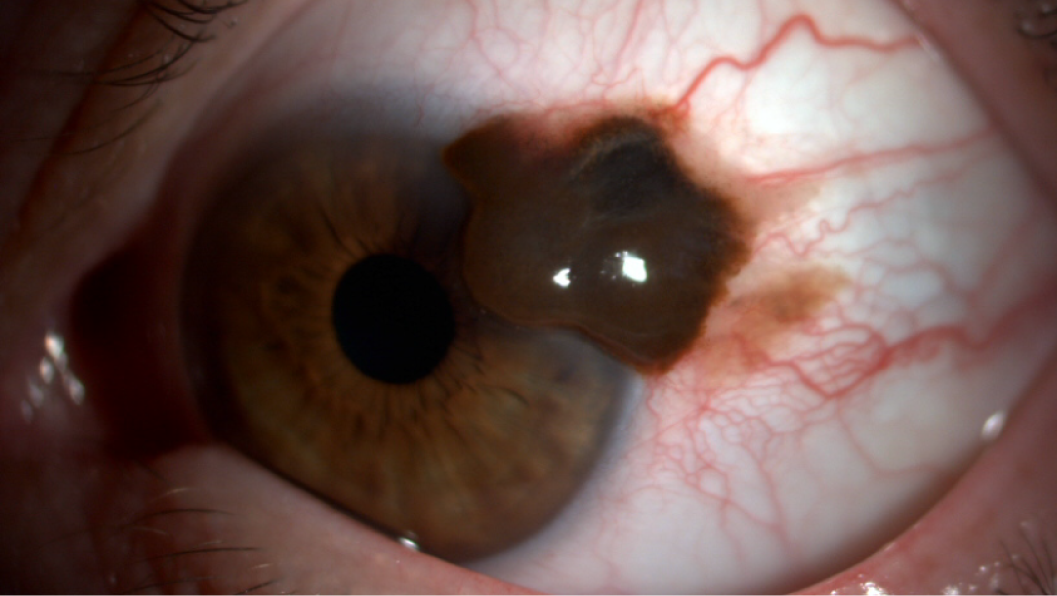
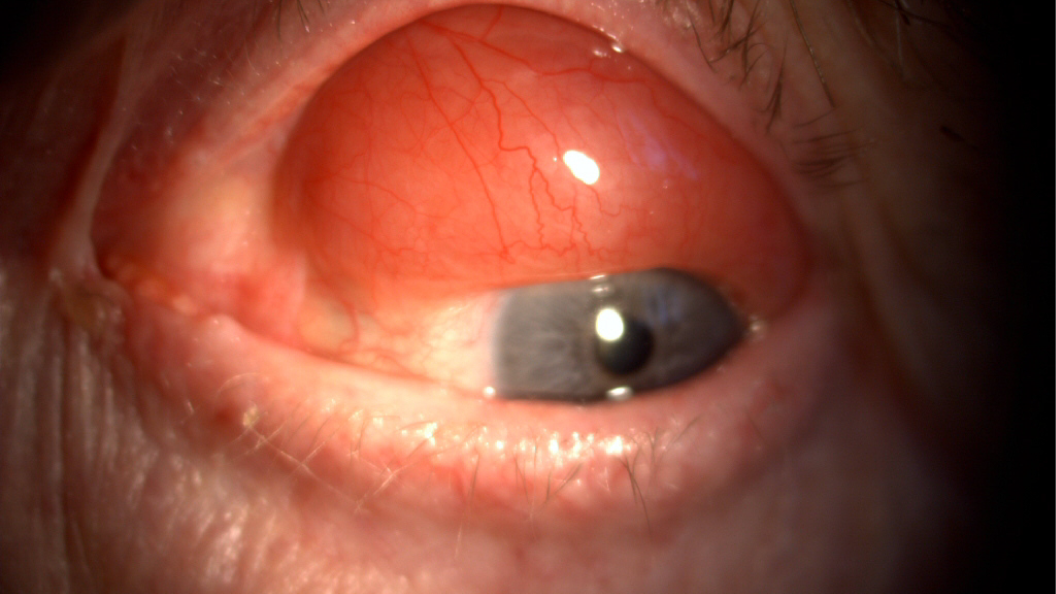
Conjunctival tumors are tumors located on the surface of the eye. These lesions are located in the visible part of the eye (bulbar conjunctiva), and can invade the cornea. In some cases, these lesions may appear under the eyelids (tarsal conjunctiva), and may not be immediately visible. The term tumor covers both benign and malignant (cancerous) tumors. Only cancers are discussed in this section.
Histology
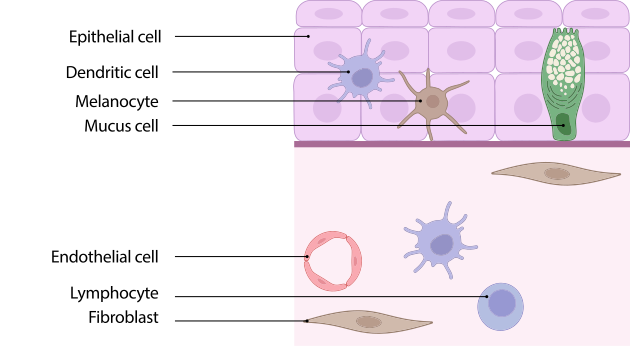
The conjunctiva is a mucous membrane composed of an epithelium, which also contains mucus cells and melanocytes, resting on the chorion, composed of connective tissue cells, and separated by a basement membrane.
Any one of these cells can be the source of a conjunctival malignancy.