Proton therapy
Everything to know about proton therapy
Proton Therapy: Advanced infrastructure for precise tumor treatment
Proton therapy requires highly specialized infrastructure, including a system for producing and delivering proton beams, precise patient positioning devices, advanced treatment planning tools, dose monitoring systems, safety control mechanisms, and sophisticated software for data management and clinical workflow.
Proton production with a particle accelerator
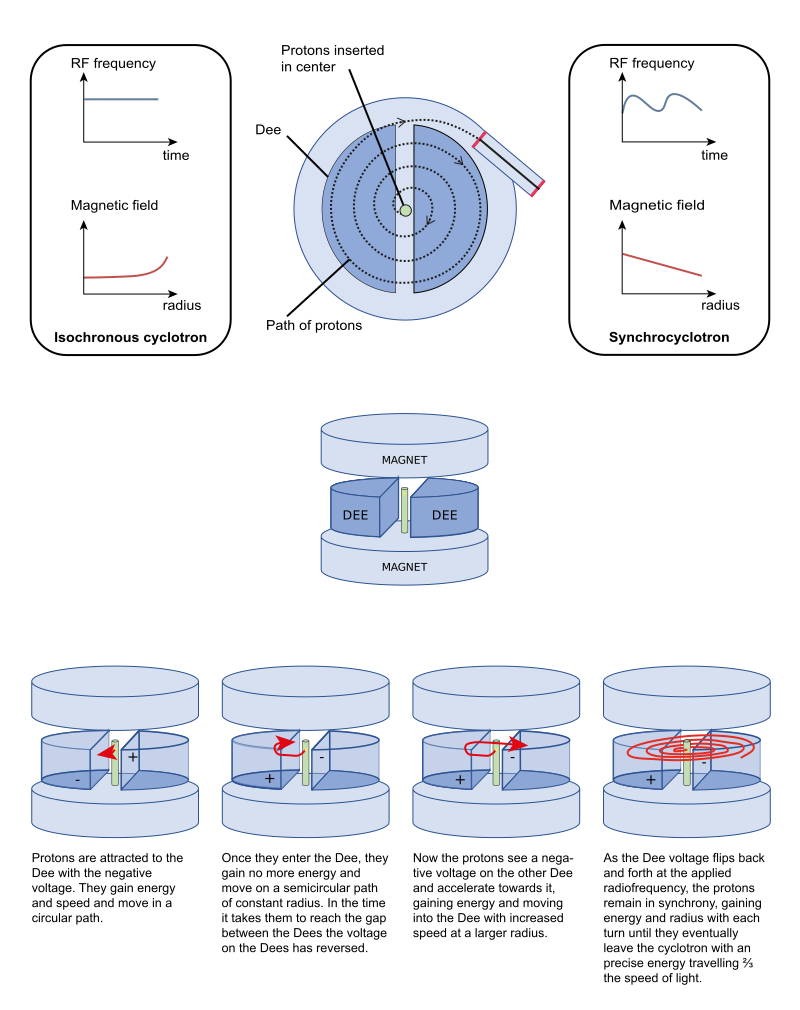
Unlike electromagnetic radiation (photons) or electrons, which are generated by linear particle accelerators, protons are produced using more complex machines known as cyclotron and synchrotron. Among cyclotron, there are two different devices that can produce protons : isochronous cyclotrons and synchrocyclotrons. Available in France, these two last types of accelerators differ primarily in how they operate at relativistic speeds—that is, when the protons approach the speed of light.
In a synchrocyclotron, the magnetic field remains constant, but the radiofrequency (RF) used to accelerate the protons is modulated over time. This modulation compensates for the increase in the protons' mass as their speed increases, maintaining synchronization between the RF field and the particles' motion. The protons follow an outward spiral trajectory, and the machine operates in pulsed mode, delivering protons in discrete bursts.
In contrast, the isochronous cyclotron operates at a constant radiofrequency, but the magnetic field varies with radius—it becomes stronger as the protons move farther from the center. This spatial adjustment of the magnetic field allows the protons to maintain a constant revolution time, despite gaining mass at higher speeds. Like in the synchrocyclotron, the protons follow an outward spiral path, but the isochronous design enables continuous operation, providing a steady and higher proton flux.
This fundamental difference affects the size, output, and clinical applications of each type of accelerator.
1. Interaction with matter: the Bragg Peak
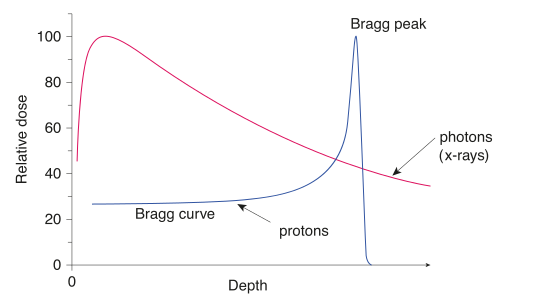
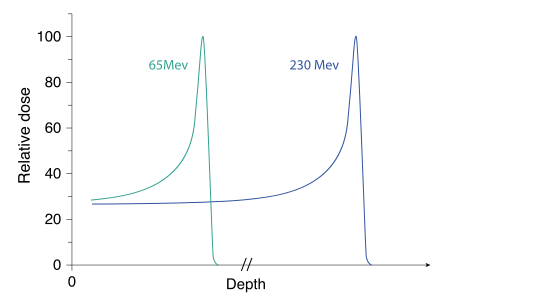
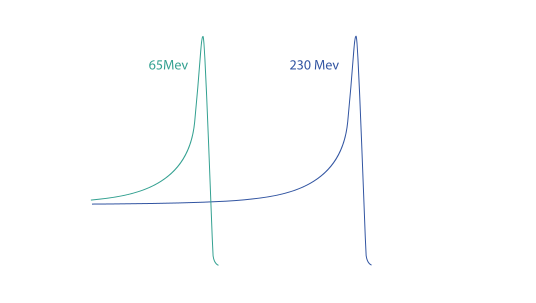
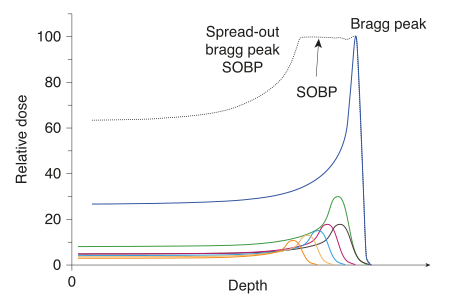
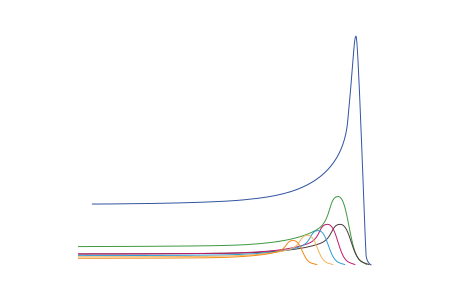
Unlike photons (X-rays) that gradually lose energy, protons deposit most of their dose at the end of their path, creating the "Bragg peak." This physical phenomenon allows radiation to be concentrated in the tumor while sparing tissues located beyond it.
Protons penetrate tissues with minimal energy loss initially, then slow down and transfer their energy massively just before stopping. The result: maximum dose in the tumor area and virtually no dose beyond the tumor.
2. Depth control: longitudinal ballistics
The penetration depth of protons directly depends on their initial energy. By modulating this energy between 65 and 250 MeV, physicians can target tumors located from a few centimeters to more than 30 cm deep.
This longitudinal precision reaches a few millimeters, allowing preservation of adjacent critical organs.
3. Lateral control: transverse ballistics
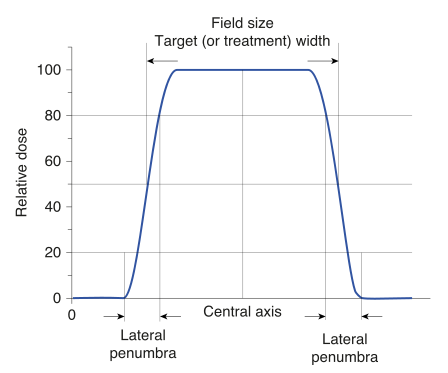
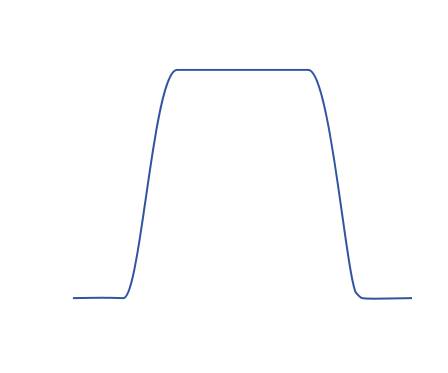
Protons undergo lateral scattering as they pass through tissues, creating progressive beam widening. This scattering generates lateral penumbra - a gradual transition zone between maximum dose and zero dose - which varies according to the technique used:
- Passive Scattering (see below):
- Single scattering: very reduced penumbra (1 to 3 mm), optimal for precision
- Double scattering: larger penumbra (5 to 10 mm) due to complex scattering
- Scanning techniques (US/PBS): intermediate penumbra (3 to 8 mm) depending on beam size
This lateral penumbra remains significantly lower than that of other particles, ensuring good geometric precision. Collimation systems allow adaptation of the beam shape to the exact tumor contour, optimizing treatment selectivity.
Passive Scattering
This historical technique widens the beam using scattering materials and employs the "Spread-Out Bragg Peak" (SOBP) technique which superimposes several peaks of different energies to create a uniform dose plateau across the entire tumor thickness:
- Single scattering: uses a single scattering foil, ideal for small tumors such as ocular lesions
- Double scattering: more complex system allowing uniform fields up to 30 cm in diameter
Uniform Scanning (US)
Magnets rapidly move a thin beam in a scanning pattern, uniformly covering the tumor. This technique eliminates physical scatterers and improves beam efficiency.
Pencil Beam Scanning (PBS)
The most advanced technique using a beam of a few millimeters in diameter positioned precisely in 3D. PBS allows:
- Uniform dose per field for optimal homogeneity
- Modulated dose per field for personalized therapeutic strategies, including dose escalation and enhanced preservation of critical structures
Application to ocular tumors
Single scattering passive diffusion with fixed horizontal beamlines remains the gold standard for ocular tumors because:
- Appropriate simplicity: the eye (approximatively 24 mm diameter) and ocular tumors do not require complex systems
- Maximum stability: no dose fluctuation, crucial for preserving sensitive structures (optic nerve, macula, lens)
- Optimal positioning: horizontal configuration facilitates immobilization and reproducible positioning
- Rapid execution: irradiation times of a few seconds, minimizing the impact of ocular movements, particularly important in children
This approach ensures optimal precision for treating ocular tumors while preserving vision when possible.
With an energy of 65 MeV, the MEDICYC isochronous cyclotron in Nice is particularly well-suited for the treatment of ocular tumors. This relatively low energy allows for precise targeting of superficial structures such as the eye without requiring significant beam degradation, thereby minimizing unwanted multiple scattering effects in tissue.
Thanks to this optimized configuration, MEDICYC offers some of the highest ballistic precision in the world, featuring:
- a sharp distal dose fall-off
- an extremely narrow lateral penumbra
1. Initial step: surgical procedure
Before starting proton therapy, a preparatory surgical procedure is usually necessary. The type of surgery depends on the location and nature of the tumor.
- For conjunctival tumors:
A surgical excision is performed to remove all or part of the tumor. In some cases, small tantalum markers may be sutured onto the sclera (the white outer layer of the eye) to allow for highly precise targeting during proton therapy. In this context, proton therapy serves as an adjuvant treatment, complementing the surgical removal of the tumor. - For intraocular tumors:
There is no tumor excision in this case. Instead, surgery is performed to suture tantalum markers to the sclera. These small metallic (non-ferromagnetic) clips—compatible with MRI imaging—serve as radiological reference points that are essential for accurate treatment planning.
After this procedure, a healing period of two to four weeks is typically required before proceeding to the next steps of the treatment process.
2. Preparation phase: Planning and Simulation
Before arriving at the proton therapy center, all relevant medical data—such as reports and imaging studies—are sent ahead to the team responsible for creating your personalized treatment plan. This team includes radiation oncologists, dosimetrists, and medical physicists.
Once at the proton therapy center, several key steps will take place:
- A CT scan is performed to assess the size and shape of the eye.
- A custom mask and dental impression are made to ensure remaining completely still during treatment.
- X-rays are taken to precisely locate any surgical markers (clips) placed during the preparatory procedure.
- The treatment plan is then designed and calculated, tailored to tumor’s location and depth.
- A simulation session is carried out to verify that the treatment is feasible and accurate.
- A final verification session is conducted to ensure all treatment parameters are correct before beginning therapy.
Detailed simulation process
Fabrication of the mask and dental Impression
You will be seated in a chair specifically designed for proton therapy. Since the area around or inside your eye that requires treatment is very small, your head must remain perfectly still to ensure the proton beam is directed with absolute precision.
To achieve this, the first step of your preparation involves creating your custom head support or treatment mask. The treatment mask actually consists of two parts:
- A dental impression, made using special dental-grade molding material.
- A mask molded from a sheet of thermoplastic material that will conform to the upper part of your face. The plastic sheet is slightly warm (but tolerable) and damp. As it cools, it hardens and retains the exact shape of your face.
Both components are assembled onto a frame, which is then securely fixed to the treatment chair. This step takes about 30 minutes and is followed by the simulation session and the development of your treatment plan.
Step-by-step: first simulation
Once you're seated in the special treatment chair, it will be rotated and moved into position just a few centimeters from the proton therapy machine. You’ll be asked to look directly at a small red light.
Don’t worry if your affected eye doesn’t see well — we can guide you using your other eye to help both align in the correct direction.
During this first session, frontal and lateral X-rays will be taken to visualize the tantalum markers (if present) that may have been placed on your eye by the ophthalmologist during a dedicated surgery.
Treatment planning
Using the marker positions (when applicable), the ophthalmologist’s input, your CT scan data, and other imaging studies, the medical team will:
- Reconstruct the treatment area
- Identify the optimal gaze direction for beam delivery
- Calculate the proton dose distribution within or on the surface of your eye
This planning phase can vary in duration depending on your specific case. Extremely high precision is required to avoid damaging healthy parts of the eye, as well as the eyelids and eyelashes.
Second Simulation
During this session, you will be positioned exactly as you were in the first simulation, using your custom mask and dental mold.You will be secured to the chair, and your head will be immobilized with the mask, making it impossible to speak during the procedure. This situation can feel claustrophobic, but the care team will be present and can intervene using a prearranged hand signal system. Taking a mild anxiolytic medication beforehand may help reduce any anxiety.
You’ll be asked to look again at the red light, and images will be taken until your eye is perfectly aligned in the position required for treatment. The team will assess how to best protect your eyelids. If necessary, numbing eye drops will be used so that small devices can be placed to gently hold your eyelids outside the radiation field.
In some cases, ultrasound gel may be applied to your eye or eyelid to enhance the precision of the beam. These measures are not always required and are customized based on your anatomy and individual treatment needs.
3. Treatment phase: proton therapy
Proton therapy is delivered in multiple sessions, called fractions. The number of sessions and the total dose vary depending on the type of tumor, typically ranging from 4 to 8 sessions, spread out over one to two weeks. However, for most ocular tumors, the total time spent at the proton therapy center usually does not exceed two weeks.
During each treatment session, you will be positioned exactly as you were during the simulation. Once the alignment is confirmed with high precision, the treatment staff will leave the room to begin the irradiation. You will be alone in the room for less than one minute.
While the treatment is being delivered, you will be continuously monitored by two cameras: one focused on your entire body and chair, and the other zoomed in on your eye. This setup allows the team to immediately stop the treatment if your eye moves out of position. If this happens, the staff will re-enter the room and carefully reposition you before resuming the session.
The actual delivery of the proton beam lasts about ten seconds (in Nice) but may vary slightly depending on the center. The beam is activated from a control console outside the room. You may hear a loud but tolerable noise as the beam is turned on, and you’ll notice several lights operating around you during the session. The treatment is painless.
1. During treatment
Proton therapy may cause some redness in the eye and swelling of the eyelid, though this is not common. These effects vary depending on the area of the eye being treated and the individual’s sensitivity. Whenever possible, special devices are used to gently pull the eyelids away from the proton beam, following local anesthesia with eye drops.
When you are instructed to look at the red light, simply fix your gaze normally. Some patients report that staring too hard at the red light may make it seem to “disappear” from vision — this is a harmless and temporary effect.
Starting on the first day of treatment, please follow these guidelines:
- Do not apply creams, lotions, makeup, or makeup removers to your eyelids.
- Avoid rubbing your eye, and only use prescribed drops or ointments from your doctor or the treatment team.
- Clean the skin around your eye gently and pat dry carefully.
- Apply cold compresses to your eyelids for ten minutes, several times a day. This helps soothe the skin.
- If anesthetic eye drops are used, protect your eye for two hours afterwards. You may cover it if going outdoors in windy conditions.
- Wear large, wraparound sunglasses whenever the weather is bright. If your eyelid was irradiated, a wide-brimmed hat or cap is also recommended, as the skin in the treated area will remain more sensitive to sunlight.
2. After treatment
The skin and eye response to proton therapy continues for four to six weeks after the last session. During this period, it is essential to continue caring for your eye and eyelid, and to attend follow-up visits with your ophthalmologist.
You may notice increased redness and swelling compared to during treatment, especially in the irradiated areas. If a small blister forms on the eyelid, leave it uncovered and avoid using any creams or lotions other than those prescribed by your ophthalmologist. Continue gentle skincare around the eye and keep applying cold compresses until the redness fades. Once the skin returns to normal, you can resume using your usual skincare products.
In the morning, your eyelids may be stuck together. In that case, gently moisten them with sterile saline and cotton. Be as gentle as possible.
If your eyelid was irradiated, it will remain more sensitive to sunlight in the long term. Whenever outdoors — especially in summer or at high altitudes — wear large, wraparound sunglasses, and consider additional protection such as a cap or hat.
Finally, any of the following symptoms should prompt an urgent consultation with your ophthalmologist:
- Significant eye pain
- Worsening visual disturbances
- Severe headaches
These signs may indicate increased intraocular pressure or a retinal detachment, which require prompt medical attention.