After exenteration
What you need to know after exenteration
Understanding exenteration surgery
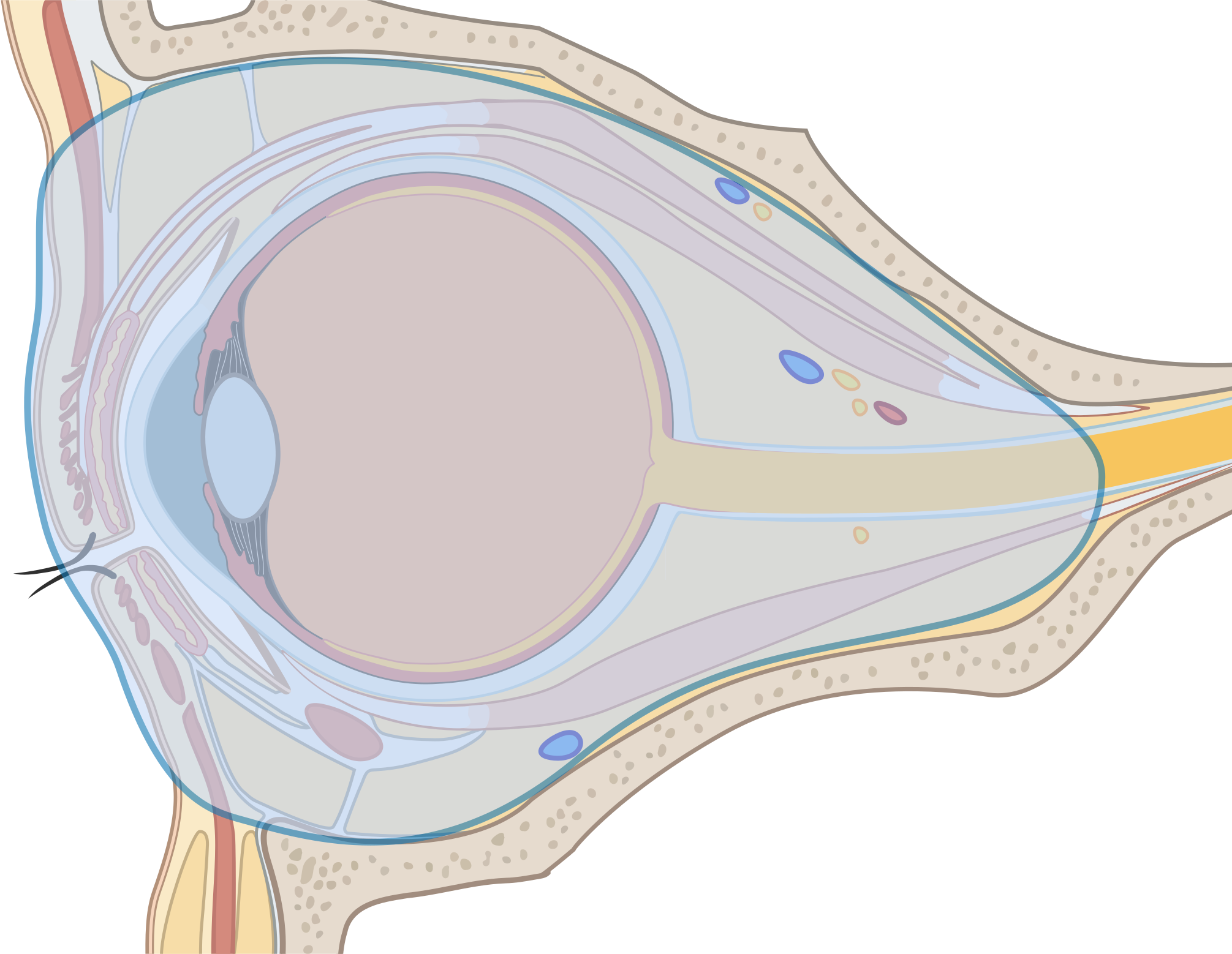
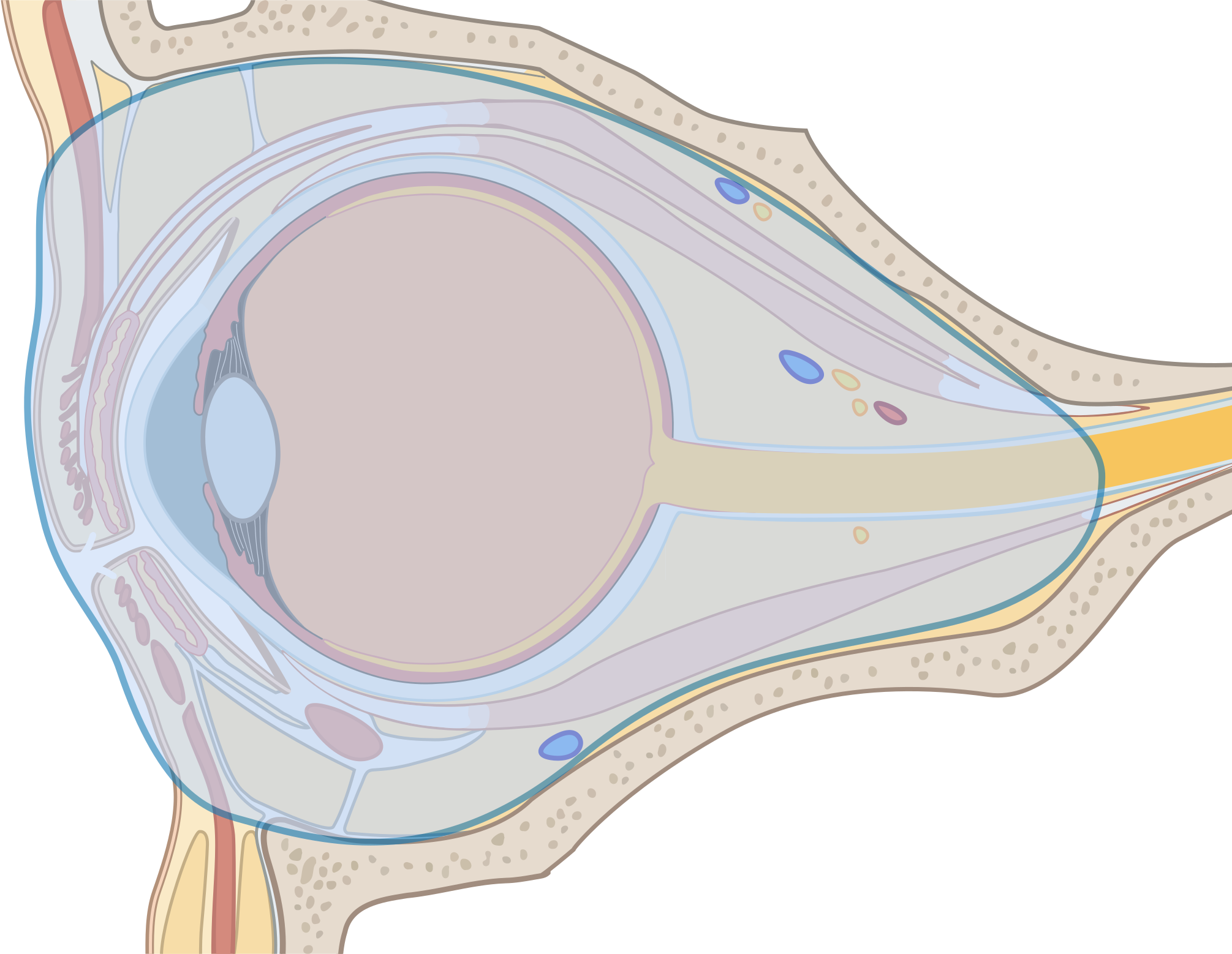
Orbital exenteration surgery involves removing the entire contents of the orbit (eye, muscles, and fat). The eyelids may or may not be preserved. Sometimes, the surgery extends to the adjacent bony structures (known as extended exenteration). This procedure is rarely performed (<100 cases per year in France).
Orbital exenteration is the standard treatment for certain particularly aggressive, recurrent, or extremely painful orbital cancers that cannot be effectively treated with eye-sparing surgery.
Although this surgery is traumatic both anatomically and psychologically, it is important to note that recent surgical techniques now help reduce operating time and simplify postoperative recovery. Additionally, improvements in orbital prostheses (epitheses) and their retention methods now allow for high-quality aesthetic rehabilitation.
Post-surgical orbital care
When you are discharged from the hospital (usually the day after or two days after surgery), a bandage covering the entire orbital area will be in place on your face. Postoperative care involves the use of ointments and oral medications, including antibiotics and pain relievers if needed. Dressings will be changed every 1 to 2 days at home by a visiting nurse.
The goal of care is to promote granulation of the orbital cavity, followed by epithelialization—the regrowth of skin over the area. Once the skin has fully regenerated, a custom orbital prosthesis can be made. Healing time varies depending on the type of reconstruction performed and can take anywhere from a few weeks to several months. Psychological support can be requested at any time if needed.
Follow-up appointments are scheduled one week and one month after surgery, then every month until the cavity is fully healed.
What will my eye look like right after surgery (before receiving an orbital prosthesis)?
The appearance depends on whether the eyelids have been preserved. If the eyelids are intact, the eye area may simply look closed. If the eyelids were removed, the orbital cavity will resemble what you might see in anatomical diagrams.
This can be a difficult moment emotionally. It’s completely normal to feel overwhelmed when seeing your surgical site for the first time. Don’t hesitate to talk with your medical team or loved ones beforehand. Emotional support is available and encouraged if you feel you need it.
Orbital prosthesis: the epithesis
Once the orbital cavity has fully healed and the skin has regenerated, your referring ophthalmologist will give approval to begin the process of creating an orbital prosthesis, known as an epithesis. This prosthesis is custom-made from silicone by a specialist called an anaplastologist (or “facial prosthetist”). The epithesis is typically replaced every two years.
How is the epithesis attached?
There are several methods for attaching the prosthesis:
- Adhered to the back of a pair of eyeglasses
- Glued directly to the skin
- Held in place using implants
The use of implants anchored into the orbital bone is the preferred and most stable technique. After the cavity has healed, small titanium implants are surgically inserted into the bone. Once the implants are osseointegrated (firmly bonded to the bone), a second procedure is performed to place magnetic abutments. Matching magnets are then embedded in the back of the prosthesis to hold it securely in place. The epithesis is removed at night. Some patients choose not to wear a prosthesis and instead use a simple eye dressing.
How long does it take to make an epithesis?
Once your surgeon has written a prescription, it typically takes around one month to receive the prosthesis. This includes about 15 days for social security approval and two additional weeks for the fabrication process, which also includes four fitting appointments with the anaplastologist. In the case of implant-retained epitheses, additional time may be needed.
How do I care for my epithesis?
Because the prosthesis is made of custom-fit silicone, it requires very little maintenance. If dropped, it will not break. Simply wash it with soap and water and reposition it yourself, or have it placed by a professional. The prosthesis should be applied each morning and removed before bedtime.
Daily cleaning is recommended. After gently removing the prosthesis by lifting from the thickest edge, soak it in warm water, then clean it using mild soap (such as Marseille soap) and a soft brush. If adhesive is used to hold the prosthesis, remove the glue from the inside out using a non-sterile compress and a medical-grade adhesive remover. Store the epithesis in a clean, dry place overnight.
Be aware that prolonged exposure to tobacco smoke or direct sunlight can cause discoloration of the prosthesis. If you experience redness or irritation in the contact area, contact your doctor immediately.
Is the epithesis covered by insurance?
For patients affiliated with the French Social Security system, coverage is free and falls under the illness scheme (ALD).Your ophthalmologist will provide the necessary prescriptions for specialized equipment coverage, allowing 100% reimbursement.
How natural is the aesthetic result?
The aesthetic outcome is often very good, thanks to recent technological advances. The result depends largely on the method of attachment—implant-based or skin-adhesive techniques typically offer better stability. The prosthesis is custom-colored to match your natural eye, making it difficult to detect. However, facial and eye movement on the prosthesis side is not possible, which most patients report as only a minor inconvenience.
What if my epithesis falls off?
No need to worry. Since the prosthesis is made of silicone, it won’t break if it falls. Just pick it up, clean it with soap and water, and reapply it. Most patients are able to reposition the epithesis themselves. If you're unsure or having trouble, you can consult your anaplastologist or ophthalmologist for help.