After enucleation
What you need to know after enucleation
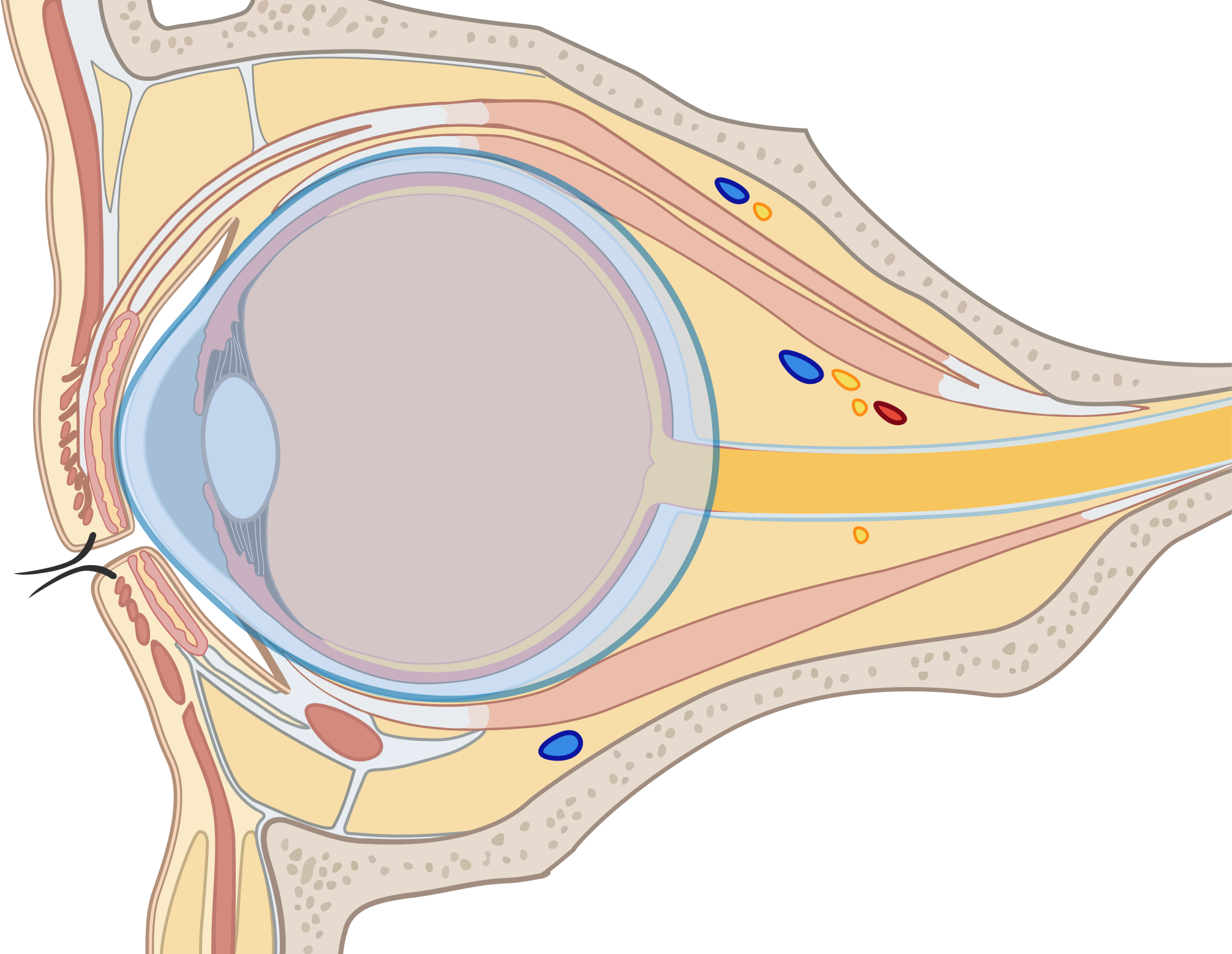
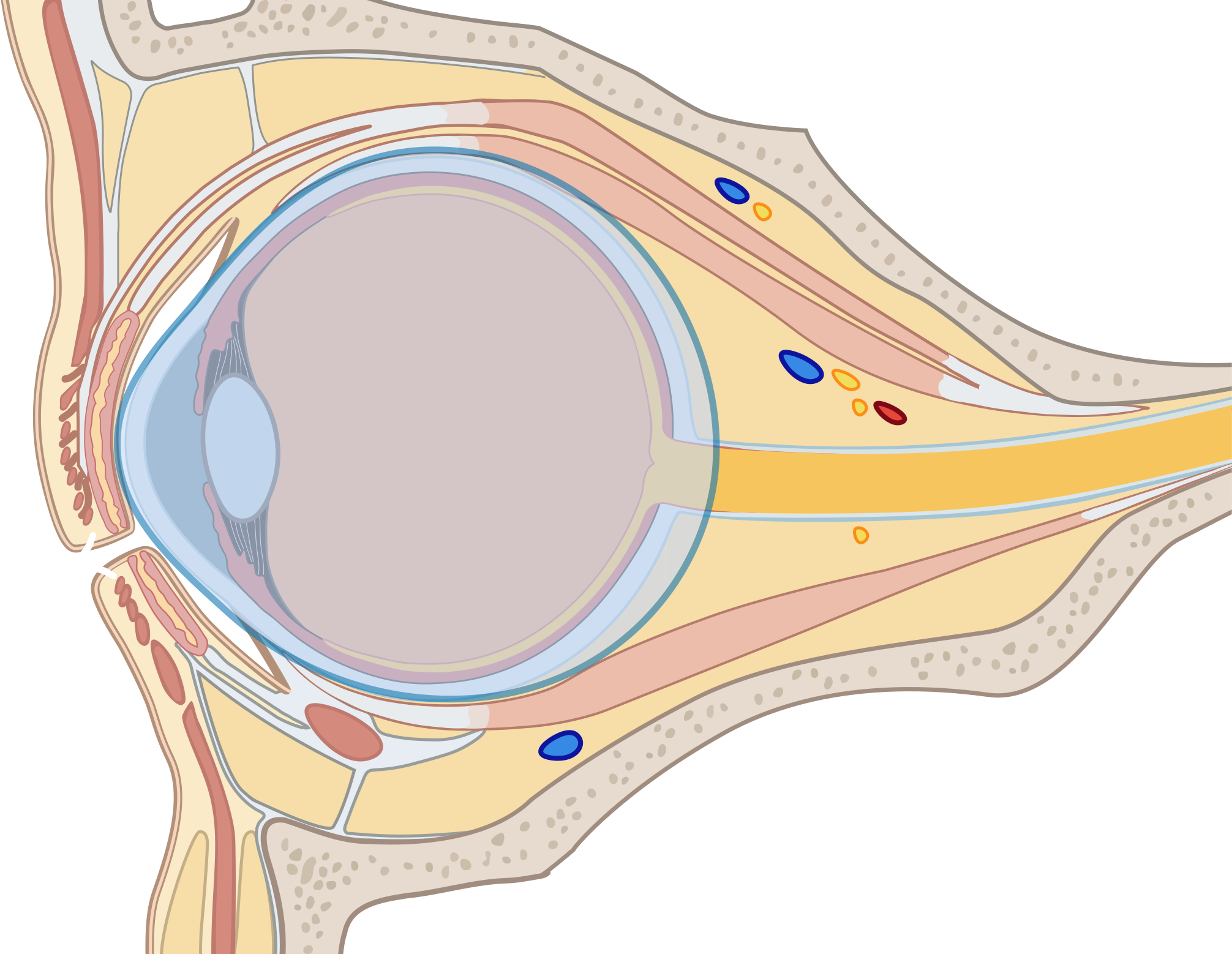
Understanding enucleation surgery
Enucleation surgery involves the surgical removal of the eye while preserving the extraocular muscles, which normally allow eye movement. The most common reason for this procedure is uveal melanoma, a type of intraocular cancer.
Enucleation may be recommended in the following situations:
- Large intraocular tumors
- Tumor recurrence
- Severe and irreversible complications (such as neovascular glaucoma, ocular perforation, or chronic pain unresponsive to treatment)
- Contraindication to proton beam therapy or other conservative treatments
During surgery, a spherical orbital implant or a dermal-fat graft is placed into the eye socket to maintain its volume. A conformer — a temporary transparent plastic prosthesis — is then inserted beneath the eyelids to support healing and shape the orbit for a future permanent ocular prosthesis.
Caring for your eye socket after surgery
Before leaving the hospital, the medical team will show you how to clean and care for your eye socket. But what will your eye look like right after surgery (before you have an ocular prosthesis)? It will simply look like a closed eye! Some surgeons prefer to suture the eyelids together for the month following surgery to simplify post-operative care, which usually involves just rinsing and applying an antiseptic eye drop. Keeping the eyelids closed helps prevent the conformer from falling out and reduces post-op swelling. The eyelids are reopened during a follow-up visit about one month after surgery.
It’s often helpful to have a family member or friend with you when the care team demonstrates what to do. At first, you might find it difficult to manage all this on your own. It can be challenging, and you will need time to adjust. If you feel overwhelmed, the hospital can arrange for a nurse to visit you at home.
Cleaning the area around the eye cocket
Always wash your hands before touching the surgical area. You will need to regularly clean your eyelids and remove secretions. This isn’t pus, but a mix of mucus and tears produced by the tissues covering the orbital surface (conjunctiva). Use saline solution with a clean, non-sterile compress to gently wipe your eyelids.
Always start cleaning at the part of the eye closest to your nose and wipe toward your ear. If you need to wipe multiple times, use a fresh moistened cotton ball each time. If you notice a lot of mucus on your eyelids, tell your doctor or nurse. Infection at the surgical site is rare but would cause increasing redness and especially orbital pain.
How to apply eye drops
There are two possibilities:
- The eyelids of the removed eye may be sutured together, preventing them from opening spontaneously. Your surgery actually leaves a small opening between the eyelids that can be used to apply the antiseptic eye drops.
- The eyelids of the removed eye may not be sutured. In this case, you can apply antiseptic eye drops just like you would for a normal eye. There is no need to remove the conformer.
Caring for the conformer
A conformer is a clear plastic prosthesis placed temporarily at the surgical site to guide healing and maintain the shape of your “eye.” It is not the implant inside the orbit, which is covered by the eye muscles and connective tissue. So how do you care for the conformer? Like applying eye drops, there are two scenarios:
- If the eyelids of the removed eye are sutured together, preventing spontaneous opening, it’s not possible to remove the conformer, so no special care is needed.
- If the eyelids are not sutured, the conformer can be removed. Simply wash it with soapy water, rinse it, and put it back in place. It’s possible for the conformer to fall out, but this is very rare. If it does, clean it as usual and reposition it.
Ocular prostheses
Temporary prosthesis
During your first visit, the ocularist will take a silicone or alginate mold of the surgical site. This procedure is generally painless. The color of your eyes will also be studied based on your healthy eye. The process takes about two hours. A few days later, a first, temporary prosthesis will be fitted. Very often, the aesthetic result with the temporary prosthesis is excellent. The prosthesis should also be able to move.
Permanant prosthesis
A few months later, the prosthetist will schedule an appointment to create a permanent prosthesis since the intraorbital volume can sometimes change (although this is rare).
How to care for and maintain your ocular prosthesis
The ocular prosthesis requires very little maintenance. Contrary to popular belief, it is not made of glass but of a plastic derivative. If the prosthesis falls, it won’t break, and you can simply wash it with soap and put it back yourself or with the help of a specialist.
Maintenance consists of rinsing the prosthesis without removing it once or twice a day if there are secretions. These secretions are normal because the main and accessory tear glands continue to function properly and keep the orbital cavity hydrated. If secretions are excessive, rinse the prosthesis with saline solution and apply artificial tears. Sometimes, an antibiotic eye drop treatment may be necessary. If symptoms persist, consult your ocularist who can check for irritation or implant exposure and can polish the prosthesis if needed. Artificial tears may be prescribed if dryness symptoms (such as stinging) occur. It is recommended not to handle your prosthesis excessively and to keep it in place continuously. Removing the prosthesis at night is not advised.
A biannual or annual checkup with the ocularist is recommended to have the prosthesis polished (smoothed) to avoid irritation. Additionally, an annual ophthalmologic exam (separate from any cancer-related follow-up) is necessary to monitor the healthy eye and to check the condition of the surgical site before and after prosthesis removal.
The average lifespan of an ocular prosthesis is about 6 years to accommodate facial morphological changes. Your ophthalmologist will prescribe a replacement prosthesis if necessary.
Is the ocular prosthesis covered by insurance?
For patients affiliated with the French Social Security system, coverage is free and falls under the illness scheme (ALD). The ophthalmologist will send high-cost equipment prescriptions to the ocularist to benefit from 100% coverage.
Is the aesthetic result with the ocular prosthesis good?
Yes, the aesthetic outcome is often very satisfactory. The ocular prosthesis is custom-made, and the eye color closely matches the healthy eye. It is often difficult to tell a patient is wearing an ocular prosthesis if this has not been disclosed. Eyelid movement is identical in both eyes. However, ocular motility is often reduced on the prosthesis side despite the reattachment of the extraocular muscles to the implant during surgery. This is usually not bothersome for patients.
A “post-enucleation syndrome” can sometimes occur due to a volume deficit of the orbital implant-prosthesis complex compared to the original eye. This volume loss may cause a hollow in the upper eyelid, drooping of the upper eyelid, or sagging of the lower eyelid. If this is bothersome, adjusting the existing prosthesis or creating a new custom prosthesis can be effective. In case of failure, treatment involves increasing orbital volume through fat grafting (lipostructure), orbital implants, or other methods. Results are generally good.
What to do if my ocular prosthesis falls out?
Don’t panic—it’s not serious. In France, ocular prostheses are made of plastic (not glass). So, if it falls, it won’t break! Just pick it up, clean it with soap and water, and put it back in place. Patients can often insert the prosthesis themselves if their ocularist has taught them how. Usually, a mark on the back of the prosthesis indicates the orientation (for example, a black dot for the top). You can insert it with your fingers or a suction cup provided by your ocularist. If you can’t put it back yourself, consult your ocularist or your ophthalmologist.
If the prosthesis repeatedly dislocates (several times a day), a new prosthesis or surgical intervention may be necessary.