Life after eye removal
What you need to know about life after eye removal
It is often a deeply emotional experience, especially from a psychological perspective. However, in certain situations, it remains the most effective way to relieve chronic eye pain or treat large eye tumors.
The good news is that recovery is usually straightforward, with minimal post-operative follow-up. Most patients regain a comfortable and satisfying quality of life.
Concerns about physical appearance are completely valid — and modern advancements in ocular prosthetics and epitheses now offer excellent cosmetic results. In most cases, the aesthetic outcome is highly reassuring.
In the following sections, learn how to care for your orbital area and your artificial eye after surgery.
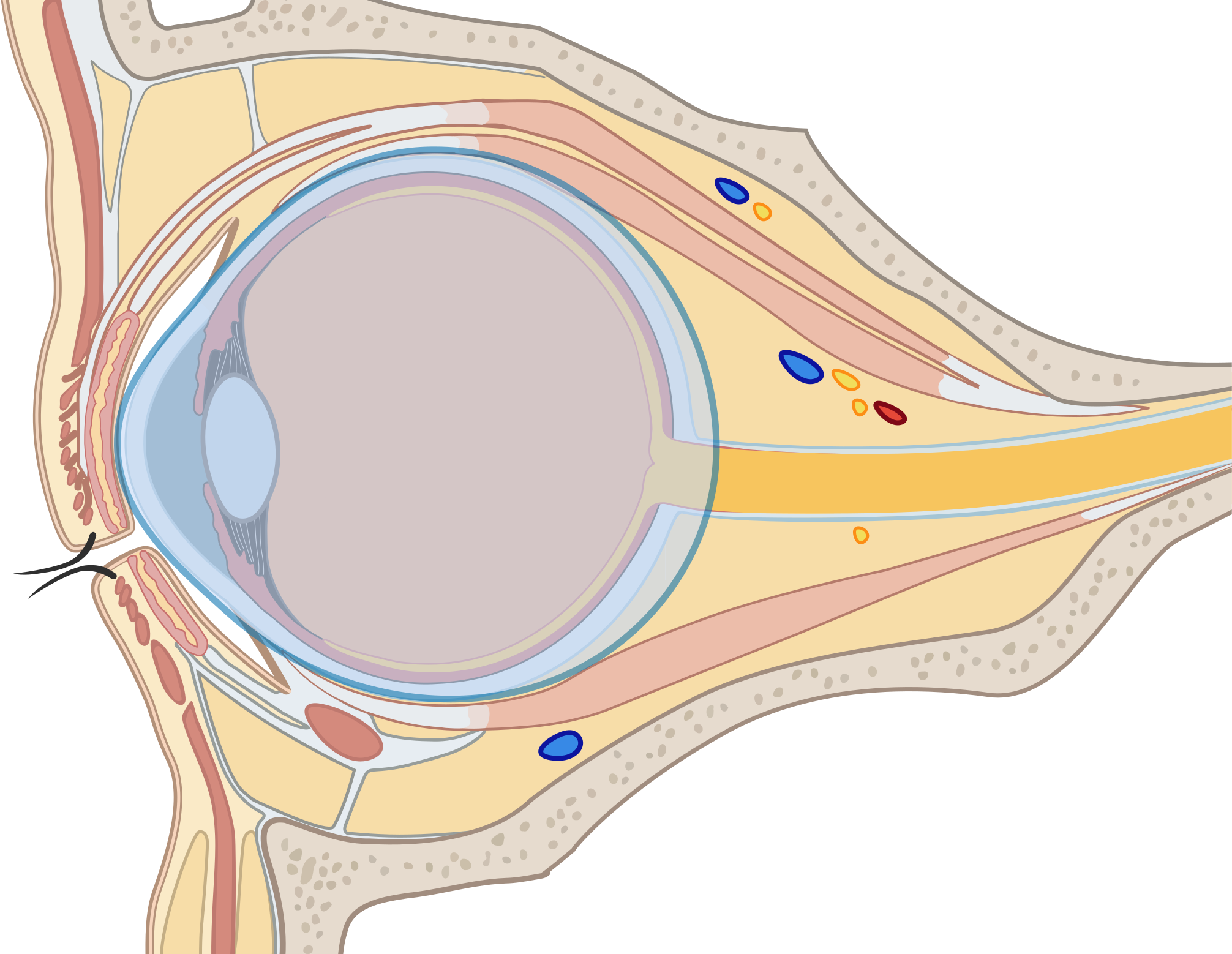
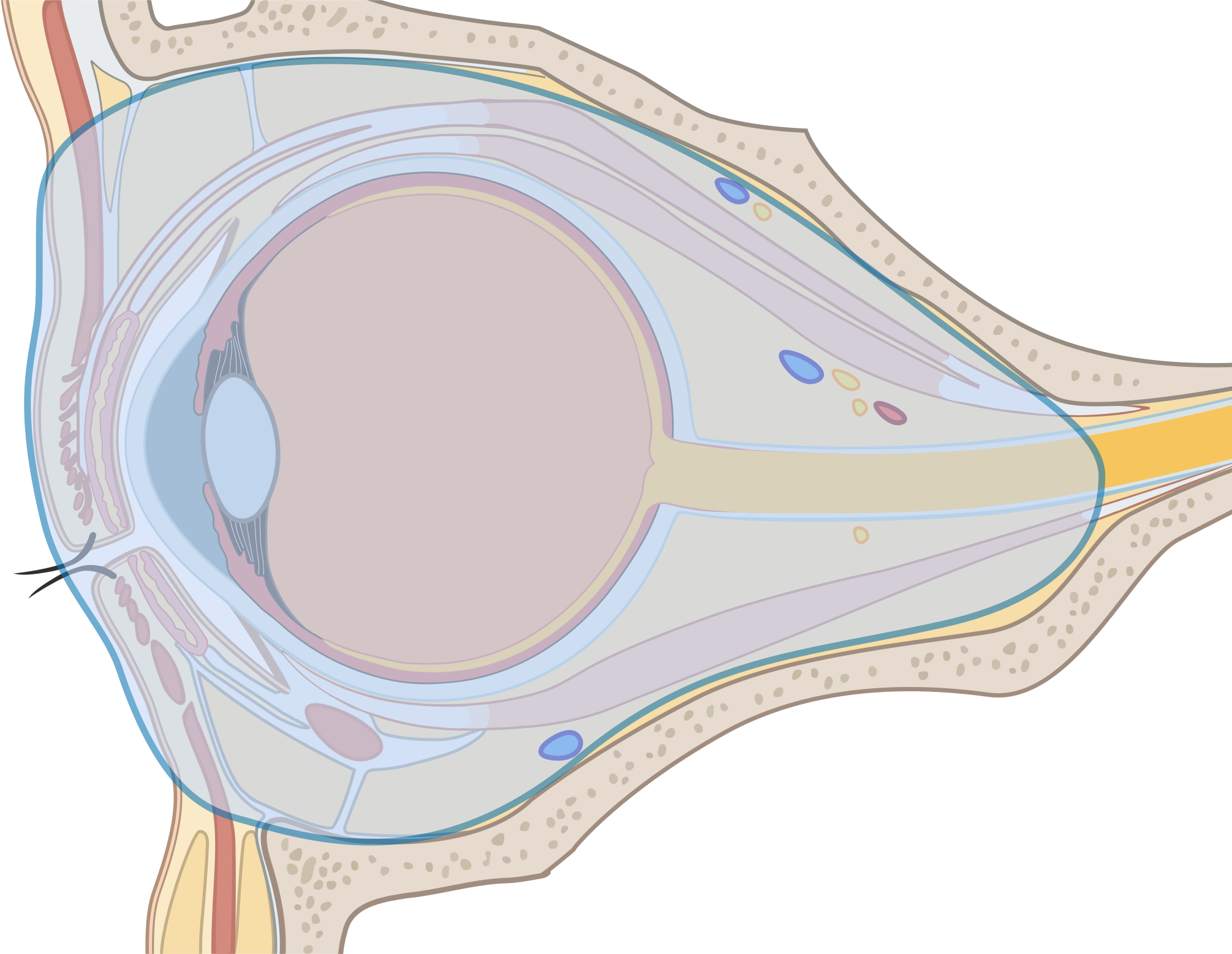
Living with one eye comes with several particular challenges, regardless of the underlying cause (tumor trauma, retinal infarction, detachment, glaucoma, etc.)
Most patients initially experience some clumsiness in everyday tasks, such as spilling water beside the glass. Extra caution is advised for activities like going down stairs during the first few days. Gradually, this clumsiness improves as the brain adapts to receiving visual information from only one eye. Patients who were already blind in one eye before enucleation surgery usually find it less troubling because they had time to adjust to this condition.
In the first few months after surgery, eye fatigue may develop in the healthy eye. This is usually temporary. If the healthy eye has a pre-existing cataract, early cataract surgery might be necessary due to increased visual demands.
As with any one-eyed patient, extra protection for the healthy eye is essential: avoid risky sports like squash or boxing and wear protective eyewear during activities such as gardening or DIY projects. An annual ophthalmologic check-up is crucial to monitor both the healthy eye and the operated site.
Can I drive?
Yes, driving is possible as long as your remaining eye does not show significant visual acuity loss or advanced visual field defects. However, your peripheral vision will no longer be the same—you won’t be able to see to the left or right as easily without turning your head. For example, if your left eye was removed, it's strongly recommended that you turn your head fully to the left before making a left turn, to reduce your blind spot as much as possible. This is part of what's called your visual field. Many people are surprised to learn that the “binocular visual field” (with both eyes open) in patients with one healthy eye is often excellent—and in some cases, comparable to those with two eyes. This is thanks to the brain’s remarkable ability to adapt after surgery.
That said, driving is only permitted once you receive medical clearance from the local driver’s license medical commission. In France, this is governed by the decree of March 28, 2022, which outlines medical conditions that may be incompatible with holding a driver’s license, or may require a license with limited duration.
Can I swim?
Yes, the ocular prosthesis or epithesis can come into contact with seawater or swimming pool water. Generally speaking, there is no contraindication for a patient wearing an ocular prosthesis or epithesis.
Can I wear make-up?
Yes, if you have an ocular prosthesis: you can apply make-up once the prosthesis is in place. Secretions can sometimes cause make-up to run. You can use cotton swabs to remove secretions in this case.
Not always in the case of an epithesis, but it can be applied directly to the epithesis.
I can see with my eye removed. How is this possible?
These may be phantom visions. As described in phantom limbs after amputation, some patients (a quarter to a third) may experience phantom eye syndrome. Phantom visions can be very surprising for patients. The visions may correspond to shapes (black dots, lightning bolts) or more elaborate images (landscape, face). Darkness and fatigue are triggering factors. Once identified and diagnosed, phantom visions are often experienced positively by patients. They are rarely bothersome, and tend to diminish and disappear over time.
Can I have an MRI?
Yes, you can have an MRI. The intra-orbital implant and surface ocular prosthesis or epithesis are not ferromagnetic and have no contraindications.
Will I ring the airport bell?
No, you're not going to ring the airport bell for the same reasons.