Uveal metastases
Learn all about uveal metastases
A uveal metastasis is a malignant tumor composed of cancer cells originating from another organ. It therefore represents an advanced stage of cancer, regardless of the type of cancer. In most cases, a uveal metastasis comes from lung or breast cancer.
The risk factors for having a metastasis from another cancer specifically in the uveal tissue are not known. Other known risk factors are related to the type of cancer diagnosed.
A uveal metastasis develops rapidly once cancer cells have migrated to the uveal tissue. It usually involves the choroid but can also affect the iris. These are usually non-pigmented lesions causing deformation of the uveal tissue, which may bleed or lead to retinal detachment due to the tumor. A metastasis can be solitary and affect only one eye, but there can be multiple tumors in one eye or even in both eyes. Diagnosis relies on a combination of arguments, using multimodal ophthalmic imaging (photography, OCT, ocular ultrasound, and indocyanine green retinal angiography) and the patient’s clinical context.
Diagnosis can be made:
- in case of a known metastatic cancer, indicating progression of the metastatic disease
- in case of a known localized cancer, indicating progression to a metastatic stage
- in the absence of a cancer diagnosis, revealing a cancer already at the metastatic stage
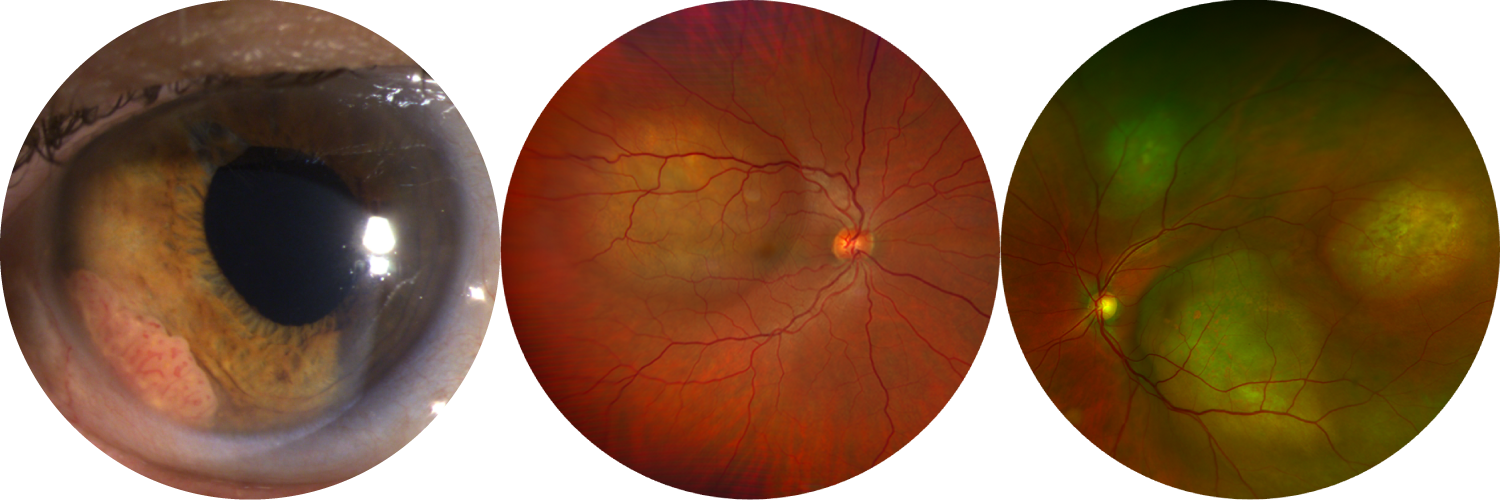
Treatment of a uveal metastasis relies on a multidisciplinary approach depending on the origin of the cancer. It usually involves specific systemic treatments (chemotherapy, immunotherapy, hormone therapy, targeted therapy), often supplemented by radiotherapy to one or both eyes.
Ophthalmologic follow-up will be specified by the referring ocular oncologist but will depend on the treatments undertaken for the cancer, in coordination with the referring oncologist.